Zara Weber · 17 September 2026
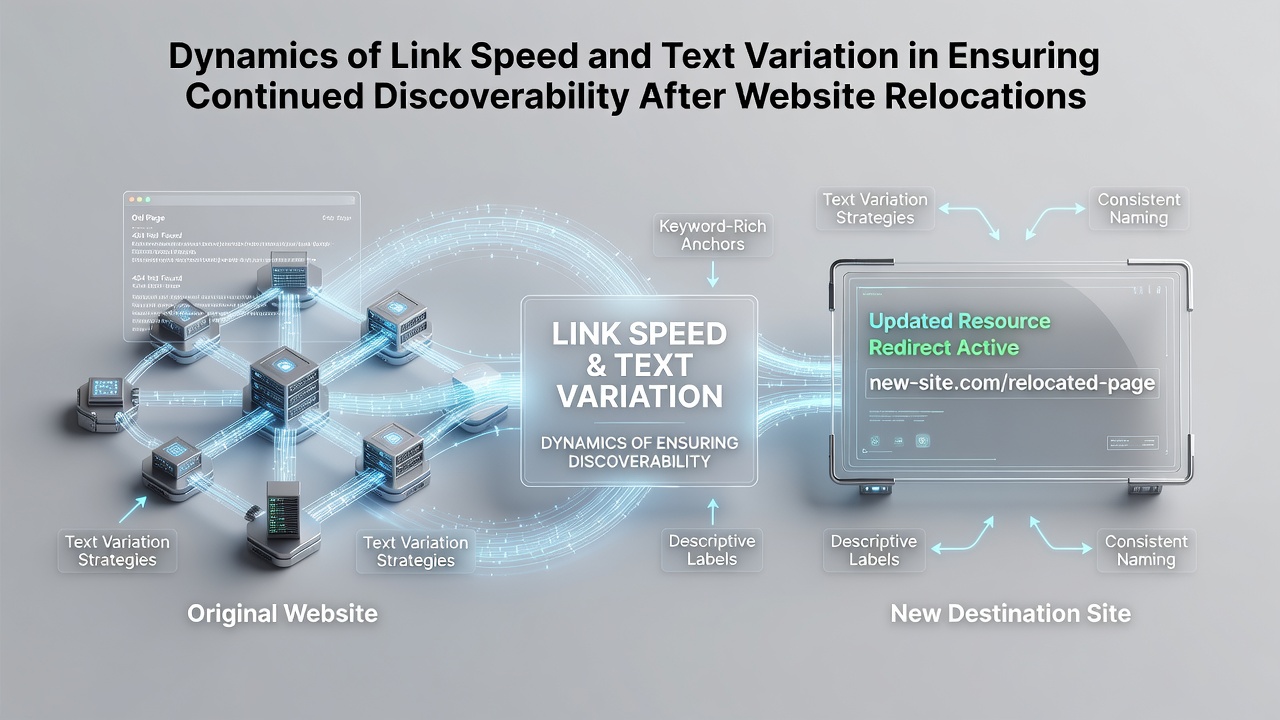
Dynamics of Link Speed and Text Variation in Ensuring Continued Discoverability After Website Relocations
Website relocations trigger a series of technical adjustments that directly influence how search engines continue to discover and index content, with link speed and text variation emerging as central factors in that process. Data from multiple studies indicates that the rate at which new backlinks appear after a migration affects crawl frequency, while anchor text diversity helps maintain natural signaling patterns that algorithms recognize as authentic. Observers note that abrupt changes in either area can lead to temporary drops in indexing rates, particularly when legacy signals from the old domain begin to fade.
Link Speed Patterns Following Domain Moves
Link velocity describes the pace at which external references accumulate on a relocated site, and researchers have tracked consistent correlations between steady acquisition rates and sustained crawl budgets. When links arrive too quickly or too slowly compared with historical baselines, indexing pipelines may deprioritize the new domain, according to technical reports on web graph evolution. Those who monitor large-scale migrations report that gradual velocity increases, spread across several weeks, align more closely with continued discoverability than sudden spikes that coincide with launch announcements.
Engineers managing migrations often coordinate outreach campaigns to distribute link creation across multiple referring domains, which prevents clustering that automated filters sometimes flag. Evidence from longitudinal crawls shows that sites maintaining pre-migration velocity curves experience shorter recovery periods before full indexing resumes, whereas those that pause link building altogether see measurable declines in discovery frequency. In September 2026, updated datasets released by academic web archives further confirmed that velocity consistency serves as a stronger predictor of long-term index stability than total link volume alone.
Role of Anchor Text Diversity
Text variation across incoming links supplies contextual signals that help classifiers distinguish commercial or manipulative patterns from organic references. Analysts examining post-migration datasets find that sites preserving a broad distribution of exact, partial, and branded phrases retain higher visibility in topical clusters compared with those that consolidate around single phrases. The reality is that uniform anchor text after relocation can trigger re-evaluation cycles, because algorithms compare new graphs against prior distributions recorded on the original domain.
One documented case involved a content platform that shifted domains and simultaneously standardized anchor phrases across outreach materials; subsequent crawl logs revealed reduced coverage of deeper site sections until diversity was restored. Researchers tracking similar events emphasize that natural language variation, including navigational and topical phrases, supports continued traversal by automated agents even when redirect chains shorten. Industry reports from international standards bodies highlight how varied descriptors contribute to robust graph connectivity without introducing artificial density in any single term.
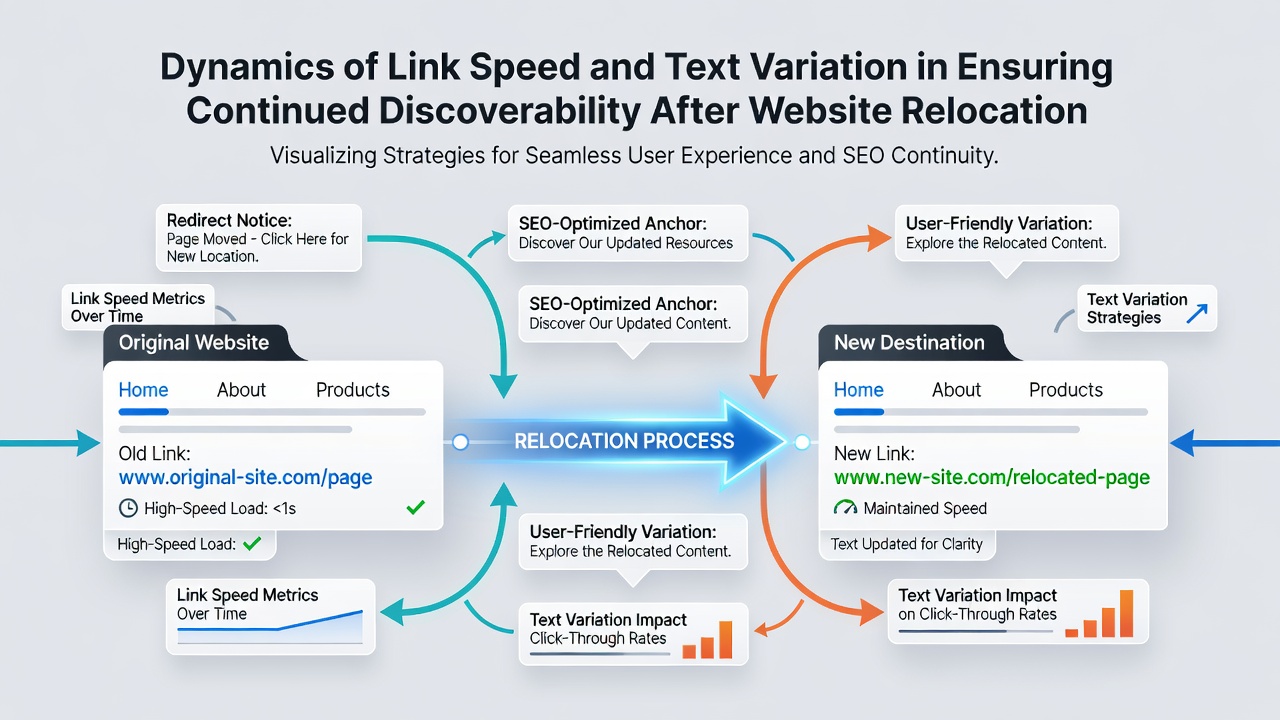
Interaction Between Velocity and Text Signals
Link speed and text variation operate as interdependent variables rather than isolated tactics, because rapid accumulation of repetitive phrases can offset the benefits of controlled velocity. Technical documentation from the World Wide Web Consortium outlines how redirect handling interacts with external reference patterns, and subsequent analyses extend those principles to modern crawling behaviors. When both factors remain aligned with pre-migration baselines, discovery mechanisms continue without extended lag periods, while mismatches extend the window during which portions of a site remain unindexed.
Case examinations of enterprise migrations reveal that teams monitoring combined metrics through server log analysis achieve steadier reappearance in search results than those tracking either element separately. Data indicates that balanced approaches, which layer incremental link placement with phrase diversification, produce smoother transitions across algorithmic updates. Observers tracking these dynamics note that timing outreach to coincide with content refreshes further reinforces the natural appearance of new references.
Practical Monitoring Approaches
Site operators implement log analysis and backlink tracking tools to measure velocity against historical benchmarks, then adjust campaigns when deviations exceed established thresholds. Academic studies of web-scale graphs demonstrate that sustained monitoring of anchor distributions provides early indicators of potential indexing friction, allowing corrective outreach before broader discoverability issues develop. Geographic variation in data sources, including reports from European research networks and North American academic repositories, consistently shows the same underlying patterns across different language markets and site scales.
Conclusion
Link speed and text variation together form measurable components of post-relocation discoverability, with available evidence pointing to the value of maintaining historical patterns in both areas. Continued observation of crawl data and reference graphs supplies the factual basis for adjustments that keep relocated content accessible to indexing systems over time.