Zara Weber · 15 October 2026
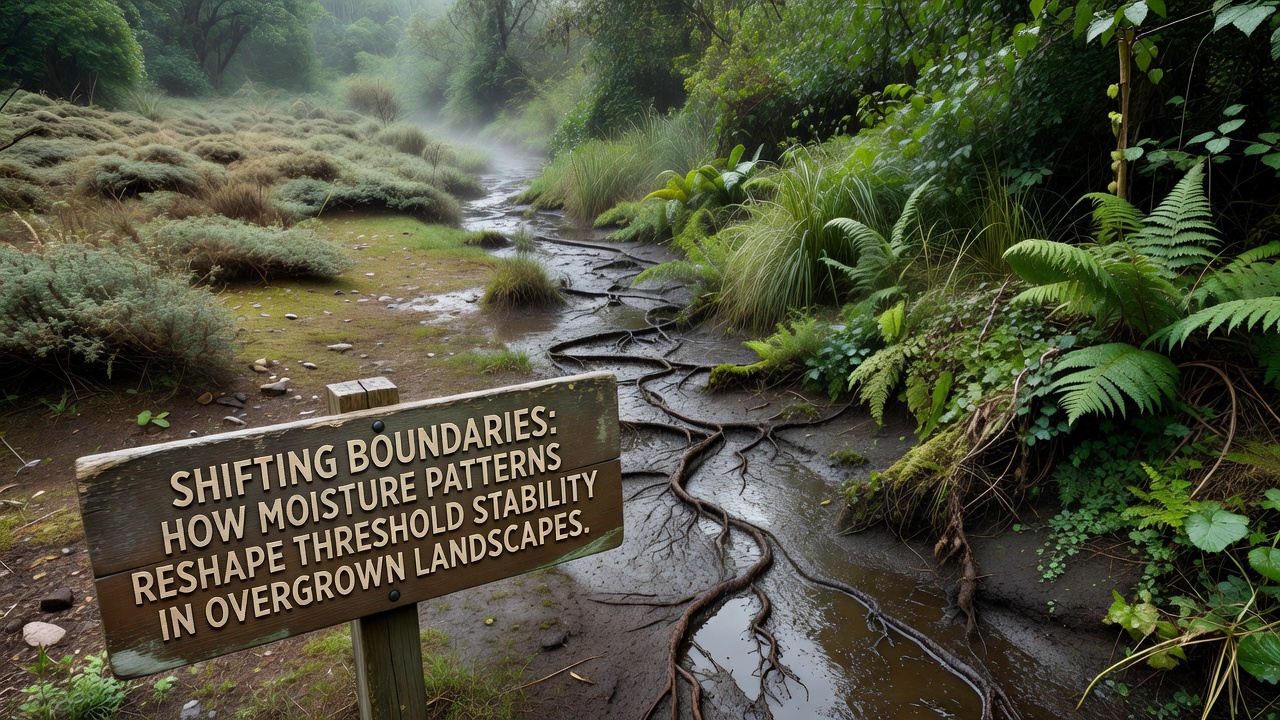
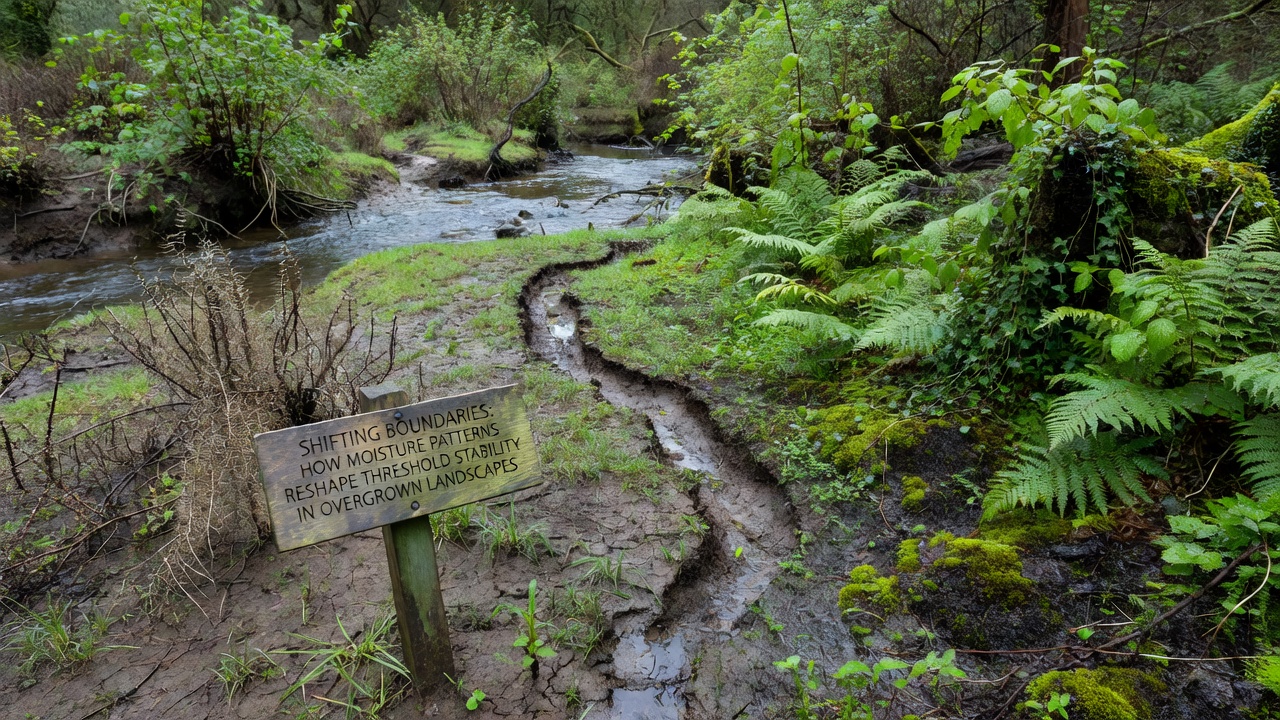
Shifting Boundaries: How Moisture Patterns Reshape Threshold Stability in Overgrown Landscapes
Moisture patterns drive significant changes in the stability of ecological thresholds across overgrown landscapes where dense vegetation meets open ground or transitions into different plant communities. Researchers track these shifts through long-term monitoring of soil water content, rainfall distribution, and evapotranspiration rates that collectively determine when boundaries between vegetation zones begin to move or stabilize. Data collected over multiple decades shows that even modest alterations in seasonal humidity and precipitation timing can push systems past critical points where established plant cover either expands or retreats.
Moisture Dynamics and Boundary Formation
Overgrown landscapes often develop sharp thresholds where one vegetation type gives way to another because moisture availability controls seed germination, root establishment, and competition between species. When rainfall becomes more variable or concentrated in shorter periods, soil moisture profiles change rapidly near the surface while deeper layers retain water longer; this creates conditions that favor certain deep-rooted plants over shallow-rooted ones along the edges. Studies from arid and semi-arid regions indicate that these thresholds can migrate several meters per year when average annual precipitation deviates by more than fifteen percent from historical norms.
Soil texture and topography further modulate how moisture moves through these boundary zones. Sandy soils drain quickly after heavy events, leaving upper layers dry and limiting seedling survival, whereas clay-rich areas hold water longer and support thicker undergrowth that reinforces the existing edge. Observers note that in regions with pronounced seasonal swings, such as parts of the American Southwest and the Mediterranean basin, the combination of intense summer drying and episodic winter rains produces especially dynamic boundary behavior.
Threshold Stability Under Changing Conditions
Threshold stability refers to the resistance of vegetation boundaries to displacement when external drivers like moisture fluctuate. Research indicates that once a landscape crosses a stability threshold, recovery to the prior configuration often requires sustained return to previous moisture regimes over multiple growing seasons. In overgrown areas where biomass accumulation has increased fuel loads and altered microclimates, even brief droughts can trigger rapid retreat of the boundary as stressed plants succumb to water stress and subsequent invasion by more drought-tolerant species.
Long-term datasets from university field stations reveal that stability decreases when interannual moisture variability rises, because repeated stress events prevent full recovery between disturbances. For instance, a multi-year study in Australian eucalypt woodlands documented boundary shifts of up to twelve meters following consecutive seasons with below-average soil moisture recharge. Similar patterns appear in European heathlands monitored by the European Environment Agency, where altered rainfall timing has accelerated transitions between shrub-dominated and grass-dominated patches.
Observed Patterns in Overgrown Regions
Field measurements show that overgrown landscapes with high biomass often experience amplified moisture feedbacks near thresholds. Dense canopy interception reduces throughfall during light rains while increasing stemflow that concentrates water at plant bases; this localized redistribution can either stabilize edges by supporting boundary plants or destabilize them when concentrated flow promotes erosion. Satellite-derived vegetation indices combined with ground-based moisture probes confirm that these micro-scale processes scale up to influence landscape-level boundary positions over time.
In October 2026, updated projections from multiple climate monitoring networks are expected to incorporate refined soil moisture datasets that will allow more precise mapping of at-risk thresholds in overgrown zones across North America and Europe. These updates build on existing records showing that regions with increasing autumn rainfall variability face heightened risk of boundary migration during the subsequent spring growth period.
Regional Case Examples and Data Trends
One study conducted across the Canadian boreal forest fringe documented how reduced winter snowpack and earlier spring melt have shifted moisture availability away from the critical early growing season, resulting in measurable contraction of shrub boundaries into former grassland areas. In contrast, sites in the southeastern United States with more consistent summer convective storms have maintained relatively stable thresholds despite overall increases in total annual precipitation. Such contrasts highlight that the timing and intensity of moisture delivery matter more than total volume alone for determining threshold resilience.
Additional evidence comes from long-term plots maintained by research institutions where controlled irrigation experiments simulate altered moisture regimes. Results consistently demonstrate that thresholds become less stable when dry periods lengthen even if total rainfall remains constant, because prolonged soil drying alters microbial communities and nutrient cycling that support boundary vegetation.
Conclusion
Moisture pattern changes continue to influence the position and stability of thresholds throughout overgrown landscapes, with evidence accumulating from diverse geographic regions and monitoring networks. Continued collection of integrated soil, vegetation, and climate data will support improved understanding of how these boundaries respond under evolving conditions, particularly as refined projections become available in late 2026.